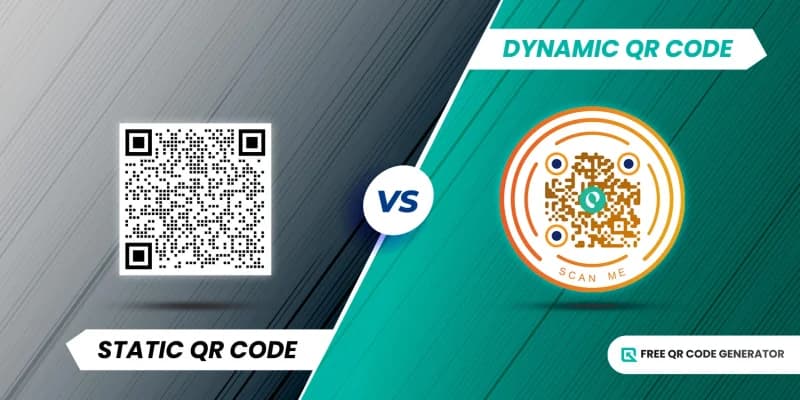
The difference between static vs. dynamic QR codes lies on their features.
Static QR codes are free and permanent, but they’re uneditable and untrackable. Dynamic QR codes, on the other hand, have edit, track, notification, and password-protect features but require a subscription for continuous use.
This is why understanding how each type works makes it easier to weigh the pros and cons and determine which best meets your needs and budget.
Table of Contents
- Static QR codes
- Dynamic QR codes
- Dynamic vs. static QR codes: Quick overview of features
- Main differences between static vs. dynamic QR codes
- How to create static and dynamic QR codes on Free QR Code Generator
- Sample QR code uses of static vs. dynamic QR codes
- Static vs. dynamic QR codes in a nutshell
- FAQs
Static QR codes
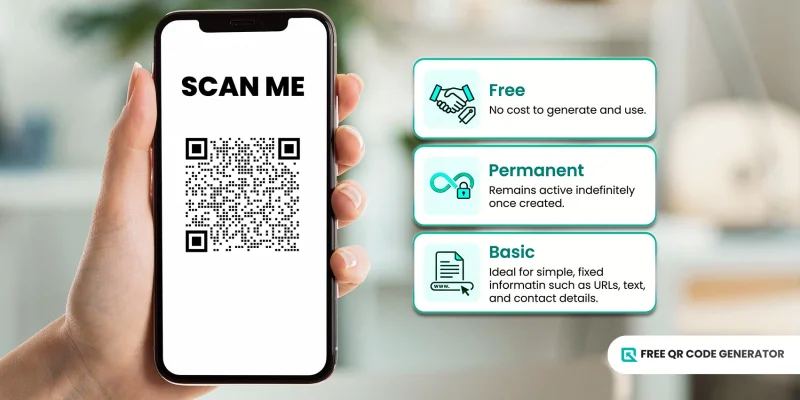
Static QR codes are the type of QR codes you can generate on a free QR code generator. Contrary to popular belief, static QR codes are not limited to URL solutions. They can also store text, Wi-Fi details, email, phone numbers, and other fixed data.
The code will remain scannable as long as the embedded content is active.
Here are some of the characteristics of a static QR code:
- Free and no payment required.
- Static QR codes embed the data directly into their pattern, so they do not depend on the QR code generator after they are downloaded or printed.
- The code will remain scannable as long as the embedded content is active.
- The larger the data, the more compact the patterns will appear. The downside to a more condensed pattern, however, is that it is prone to scanning errors.
- Depending on the platform, the appearance of these codes can also be modified to align with specific branding aesthetics.
Dynamic QR codes
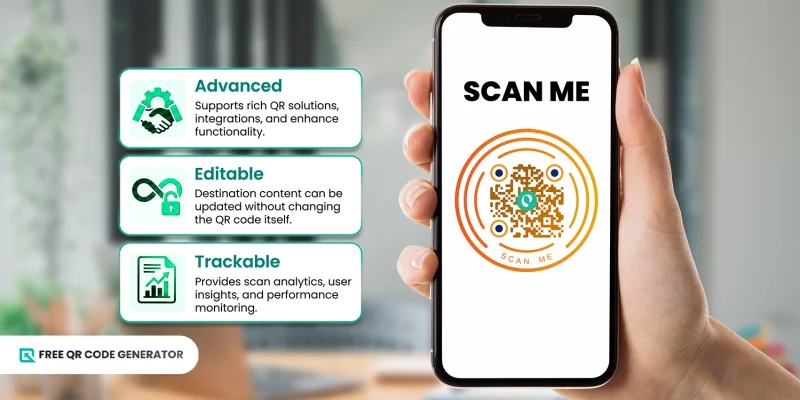
Dynamic QR codes are a flexible type of QR code. They use a short URL that redirects devices to the actual content. So, regardless of how large the embedded content is, the pattern remains thin and easy for scanners to recognize.
Here are the things that make dynamic QR codes advanced:
- Has the ability to edit the embedded content without the need to reprint or recollect previously shared QR code copies.
- It allows you to track interactions, from the number of scans, time, and date of scanning, to the devices used by scanners.
- You can set your QR code’s accessibility using expiry settings and, at the same time, secure the QR with password protection.
- There is an email notification feature that informs you of every scan that your code receives.
- Dynamic QR codes are commonly subscription-based. Businesses invest in this type of QR code to produce high-quality codes, access advanced tools for branding and campaign needs, and monitor audience activity.
Dynamic vs. static QR codes: Quick overview of features
Here’s a quick comparison of static and dynamic QR codes.
| Features | Static QR Codes | Dynamic QR codes |
| Cost | Free | Subscription-based |
| Account requirement | No sign-up required | Sign-up required |
| Solution types | Basic (usually URL solution only) | Advanced (includes vCard, social media, file, etc.) |
| Customization | Available but limited | Comprehensive |
| Ease of setup | Very easy | Easy |
| Content updates | Not supported | Supported |
| Tracking and scan analytics | Not available | Available (via QR code generator) |
| Expiration controls | No expiry (permanent) | Set by users or based on the plan |
| Scan alerts | Not available | Available |
| Recommended for | Basic and personal use only | Businesses, complex campaigns, and professional use |
Main differences between static vs. dynamic QR codes
- Cost: Static QR codes are free; they don’t require payment. In some cases, the platforms don’t even require sign-ups.
On the other hand, dynamic QR codes work through subscriptions, although there are generators that offer free dynamic QR codes.
- Solution types: Between static vs. dynamic QR codes, the former are usually limited to a URL-only solution, where you can convert any link into a QR code.
Dynamic QR codes, by contrast, offer a wide range of solutions and combine basic and advanced features. Sample solutions include a file, a landing page, social media, and a vCard QR code for digital business cards, among others.
- Customization: Both static and dynamic QR codes offer customization features; however, the depth of those features varies.
Static QR codes are usually limited to a few colors, but the best dynamic QR codes can offer a range of options depending on the generator. There could be choices for frames, pattern designs, colors, eye styles, and ready-to-use call-to-action tags.
- Ease of setup: Since static QR codes are free and pretty simple, most generators’ user interfaces are also easy to navigate. They are usually straightforward, require no sign-up, and let you generate a QR code directly.
Meanwhile, dynamic QR codes require more steps than static ones; the tools in some dedicated generators usually have more buttons to get familiar with. This could be intimidating at first, but they are actually easy to navigate.
- Content updates: QR code content can be updated in dynamic QR codes. You can edit the embedded link, file, or data through the generator.
This is a sought-after feature because it helps reduce costs associated with QR code reprinting or redistributing. Unfortunately, static QR codes do not have this feature.
- Tracking and scan analytics: Tracking is a feature that is available in the best dynamic QR codes. It allows you to monitor scans of your QR codes, including the date, time, and location of each scan, as well as the devices used to scan the codes.
Brands seek this feature in QR code generators to ensure successful QR code campaigns. Static QR codes, on the other hand, don’t offer this feature.
- Expiration controls: Static QR codes are permanent, meaning they never expire and remain active as long as the generator exists.
Dynamic QR codes, on the other hand, depend heavily on the type of subscription plan you have. Generators usually set a reasonable number of scans for users to enjoy. To continue using these codes, you will need to subscribe.
- Scan alerts: Dynamic QR code generators usually offer a feature that sends you an email notification whenever your QR code is scanned. It helps you monitor your code's activity and improve your campaigns.
Unfortunately, you can’t have this in static QR codes.
- Customer service: For some QR code users, speaking with a customer service representative is necessary, especially to address issues or seek clarification.
Dynamic QR code providers offer 24-hour customer service via email, chat, or phone.
Static QR code generators, on the other hand, don’t offer this service as free QR codes are generally easy to create anyway.
How to create static and dynamic QR codes on Free QR Code Generator
- Go to Free QR Code Generator.
- Choose a QR code solution you wish to use.
- Provide the required information.
- Choose between ‘Static’ and ‘Dynamic’ QR code type.
- Click the ‘Generate’ button.
- Proceed to customize your QR code design.
- Download and share your QR code.
Sample QR code uses of static vs. dynamic QR codes
Here are a few static and dynamic QR code examples of how you can maximize them:
When to use static solutions?
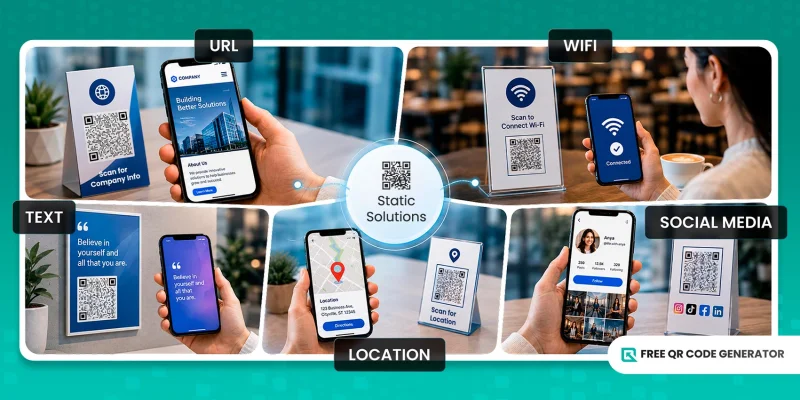
- To direct users to your company website's homepage.
- To provide Wi-Fi access without printed vouchers.
- To deliver motivational quotes or messages.
- To share an exact location.
- To lead users to a specific social media profile or page.
When to use dynamic solutions?
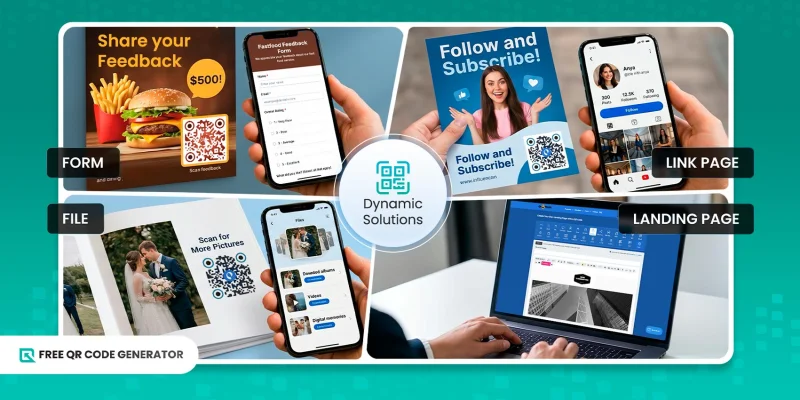
- To distribute survey questionnaires or collect feedback.
- To promote all your social media platforms with a single QR code.
- To share files such as videos, images, and documents.
- To lead the audience to a personalized landing page.
Static vs. dynamic QR codes in a nutshell
Static and dynamic QR codes have distinct functions and features that serve different purposes depending on your objectives.
For simple, personal uses, static QR codes can work wonders for you. Dynamic QR codes are more valuable for larger, more complex campaigns.
Before you create a QR code, consider your objectives and budget, if you have a set one. Choosing one right off the bat, without asking yourself what you really need, may become more expensive for you in the long run.
Our biggest suggestion is this: use a free QR code generator that doesn’t require payment information or a long-term commitment. When you compare the different options firsthand, you’ll naturally be able to decide which one suits your needs best.
FAQs
How to tell if a QR code is static or dynamic?
Dynamic QR codes usually display a short URL when scanned, which gives you the option to continue visiting the site or not. Static QR codes, on the other hand, directly reflect the embedded data.
Which is better, a static or a dynamic QR code?
There is no single best QR code; it depends on your needs. If you need a QR code with advanced features that can be tracked or edited, go for a dynamic one. But if it’s one-time permanent use only, static QR codes will do.
Are static QR codes forever?
Static QR codes could last forever, as they have no expiration date, but they can become inaccessible when the embedded data is corrupted or no longer works.