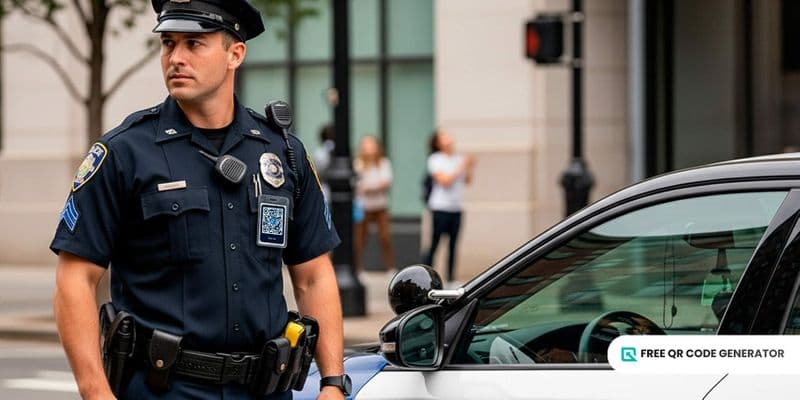
New York — January 22, 2026 Lawmakers proposed standardizing the use of QR codes by Immigration and Customs Enforcement (ICE) and Customs and Border Protection (CBP) officers to increase transparency, especially during enforcement operations.
Representative Ritchie Torres, the bill's primary sponsor, said, "This legislation would modernize identification standards for federal immigration enforcement officers and improve transparency during enforcement encounters.”
This is not the first time the idea of using QR codes has been brought up in government matters; in fact, Governor Newsom signed a bill with a QR code rather than a lengthy announcement. Now, QR codes are making a name in safety and transparency.
Table of Contents
How the ‘Quick Recognition Act’ began

HR 7233, the Quick Recognition Act, was authored by Representative Ritchie Torres of New York, along with two others, following a highly controversial federal operation involving ICE agents.
In that operation, 37-year-old Renee Nicole Good was fatally shot by an ICE agent. In the body cam video acquired from the agent, Good’s companion can be heard requesting multiple times for the officer to unmask.
When Good drove the car away from the officer, the officer fired. Following this incident, the Homeland Security Secretary stated that the act was done in self-defense to prevent an alleged drive-by, but the public believes otherwise.
A YouGov snap poll was conducted after the ICE-Good incident. Among the 2,686 US adults surveyed, 52% are dissatisfied with ICE’s job performance, while only 39% approve of how they handle their job.
This prompted lawmakers to heighten means of identifying officers, although they are, by law, required to present themselves properly.
The role of QR codes in the growing gap between the public and ICE
To make this possible, the suggestion was to use scannable QR codes for transparency, created with a QR code generator tool. The public can then immediately identify officers if they refuse to identify themselves during operations or arrests.
As Torres reiterated, "Keep in mind, officers have a responsibility to identify themselves to the public. And scanning a QR code is much safer than asking for a physical ID."
Details could include names, badge numbers, agency, and even the number of complaints an officer currently has. Even with a refusal, the public still has ways to obtain details about their apprehender, which can serve as their defense and protection, especially when the operation is unjust or illegal.
The public, however, has mixed reactions about the proposed solution. Some are concerned about the longevity and quality of this code over time—how will tears and scratches affect the scannability? Or how will the government ensure that these codes remain authentic and untampered?
But despite that, the proposal also received some positive feedback; some believe this is a good way to hold officers accountable for their actions and to contribute to de-escalation, since their identities are known.
Technology to strengthen identification and safety
The proposal to use QR codes for police identification underscores how modern-day security is evolving, adopting simple yet impactful technologies to address public safety issues.
Despite concerns, everything remains in the gray as the bill is currently being referred to the Committee on the Judiciary; until then, the impact and potential issues can only be evaluated.
This is a developing story.